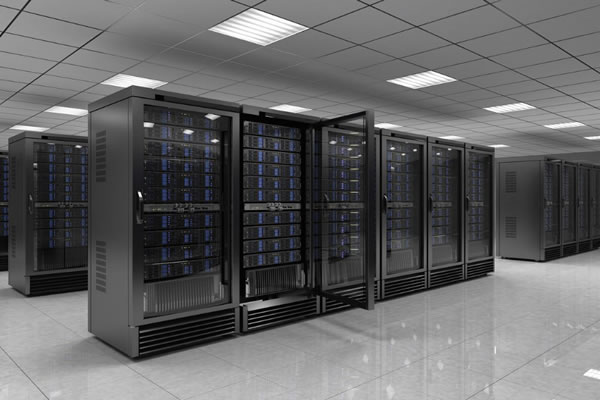
In the Hong Kong financial market, how to choose the appropriate Hong Kong Exchange computer room server configuration for financial business is a basic decision. This article focuses on transaction performance, latency requirements, reliability and compliance, and provides actionable evaluation dimensions to facilitate financial institutions to make reasonable judgments when deploying and selecting computer rooms.
Clear business requirements and target delays
The first step is to define the business type and target latency: high-frequency trading and market making require extremely low latency, algorithmic trading is sensitive to jitter, and back-end settlement pays more attention to throughput and consistency. Clarify the maximum acceptable latency and jitter indicators for each type of transaction as a baseline for server configuration, network bandwidth and redundancy design.
Network architecture and bandwidth design
The network is the core of connecting exchanges, and it is crucial to choose low-latency physical links and high-quality switching resources. Pay attention to link redundancy, cross-switch delay, network jitter and packet loss rate; reasonably reserve burst bandwidth and configure QoS policies to ensure priority transmission of transaction messages and rapid reporting.
Consider the dedicated line and internet connection of the exchange
When selecting a computer room, you should evaluate the direct interconnection or dedicated line solution to the Hong Kong Exchanges and Clearing Limited to reduce the number of hops and interference from intermediate equipment. Consider the synchronization strategy for local/remote disaster recovery, measure the replication delay between the primary and secondary servers, and ensure that transaction matching and risk control data are consistent within the allowed range.
Key points of computing and memory configuration
Server CPU and memory configuration should be determined based on the number of concurrent connections, transaction instruction processing speed and risk calculation complexity. Priority is given to ensuring single-threaded execution efficiency and minimizing context switching, while reserving enough memory for cache and in-memory databases to reduce disk access frequency.
Storage performance and IOPS requirements
The trading system is sensitive to storage IOPS and latency. Log writing and historical data reading and writing need to ensure stable throughput and low latency. Adopt a tiered storage design: use high-IOPS media for high-frequency hot data, archive cold data to media with high capacity but large latency, and ensure that the persistence strategy meets audit requirements.
High availability and disaster recovery design
To ensure business continuity, multiple layers of redundancy should be designed: server cluster, dual power supply, network link redundancy and off-site hot backup. Develop a verifiable failover process and regular drills, measure RTO (recovery time objective) and RPO (data loss tolerance), and reflect them in the configuration.
Security and Compliance Requirements
Financial business has strict security and compliance requirements, and server configuration must support mandatory access control, network isolation, log auditing, and encrypted transmission. The computer room should meet industry regulatory requirements and data sovereignty specifications, and provide traceable security incident response and audit records.
Monitoring, operation and maintenance and automation
Continuous monitoring is key to ensuring performance and availability. Deploy end-to-end monitoring covering network delay, system load, disk IO and application indicators, combined with alarms and automated operation and maintenance scripts, to achieve rapid positioning, capacity prediction and automatic recovery of exceptions, reducing manual intervention time.
Computer room location and Internet ecology
Choosing a computer room close to the Hong Kong Exchange’s interconnection hub can reduce physical delays while taking into account power, power supply reliability and operator ecology. Prioritize the evaluation of the link options of the computer room, the convenience of access to the adjacent financial ecosystem and third-party services (such as market data providers).
Cost vs. scalability balance
Without disclosing specific prices, different configuration options should be evaluated based on total cost of ownership (TCO), including hardware, network, maintenance and disaster recovery costs. The design takes scalability into consideration to avoid excessive initial investment or frequent modifications in the later period, and adopts a modular architecture to support business growth.
Summary and suggestions
To sum up, in order to choose the appropriate server configuration for the Hong Kong Exchange computer room for financial business, the overall design should be based on the business delay target and combine network, computing, storage, disaster recovery and compliance. It is recommended to conduct performance baseline testing and disaster recovery drills first, and then gradually deploy and optimize according to the modular principle to ensure a balance between availability, security and cost-effectiveness.
- Latest articles
- GP Singapore Server Stability In-depth Evaluation And Deployment Best Practice Guide
- Website Migration Case Sharing SEO And Speed Changes After Switching Between Hong Kong Vps And Japanese Vps
- The Technical Team’s Experience Discusses The Three Core Indicators For Choosing The Best Vps In Korea
- Performance Tuning And Monitoring Methods Of Vietnam Cn2 Network In High Concurrency Scenarios
- Buy Cloud Servers In Thailand At Low Prices, Compare Manufacturer Discounts And Long-term Operation And Maintenance Costs
- Enterprise Deploys Japanese Native Dynamic IP Address Load Balancing And Failover Solution
- Use Vietnam's Native IP Cloud Server To Build A Private VPN And Corporate Intranet Acceleration Solution
- How To Choose The Appropriate HKEX Computer Room Server Configuration For Financial Business
- Common Misunderstandings Avoidance Guide On The Configuration And Maintenance Of Multiple IPs For US High-Defense Servers
- Beginner's Guide: How To Choose A Cloud Server In Hong Kong? Detailed Explanation Of Bandwidth Selection And Billing Methods
- Popular tags
-

Compliance Review Teaches You How To Use Hong Kong Station Group Servers In Compliance With Regulatory And Platform Rules
from the perspective of compliance review, this article introduces key points such as server selection, domain name and ip management, content compliance, logs and audits, privacy protection and technical protection in hong kong site clusters, etc., to help operators use the site cluster safely in compliance with regulations and platform rules. -

How To Get More Customers Through Hong Kong Station Group Marketing Phone Calls
this article explores how to get more customers through hong kong station group marketing calls and provides practical strategies and suggestions. -

The Reason Why Hong Kong Site Group Has Few Servers But Powerful Functions
this article explores the reasons why the number of hong kong server groups is small but powerful, and analyzes its importance in network optimization and seo.